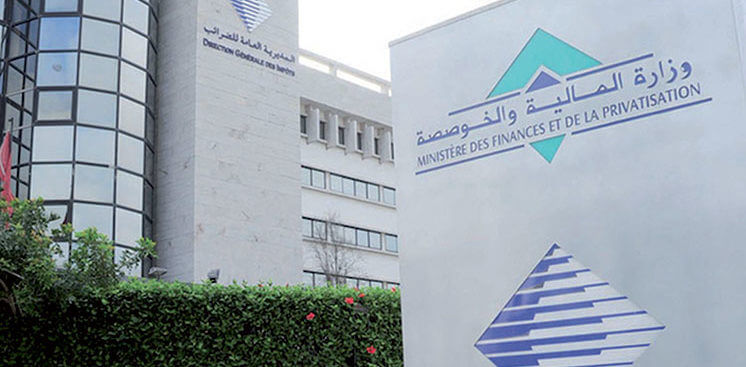
Filing of country-by-country declarations for 2022

The Direction Générale des Impôts (DGI) has issued a reminder of the December 31, 2022 deadline for country-by-country declarations. In accordance with the provisions of Article 154 ter of the CGI, country-by-country declarations must be filed electronically, using the model form drawn up by the tax authorities.

The so-called country-by-country declaration (articles 154 ter and 199 bis) concerns multinationals, and will apply to the financial year starting January 1, 2021. The declaration must be filed with the tax authorities in 2022.

Country-by-country reporting obligations apply to any multinational enterprise group with total consolidated group sales of DH8,122,500 or more, as shown in its consolidated financial statements, during the previous financial year.

We remind you that in the event of failure to file a country-by-country declaration or incomplete information, the company is invited by letter to regularize its situation within 15 days. If the company fails to do so, it is liable to a fine of DH500,000, issued by way of assessment (article 199 bis).

This declaration will give tax authorities a global view of the operations of multinational groups. Tax authorities can use this information to carry out high-level assessments of transfer pricing risks, etc.

What you need to know :

  • It applies to the 2021 financial year and must be filed with the DGI in 2022.
  • Automatic exchange with foreign tax jurisdictions from 2023

For further information on country-by-country reporting, please contact our legal and tax team.

Faithfully yours,

Ilham Taha-Bouamri
Chartered accountant and tax specialist

The tax review of the auto entrepreneur as part of the draft finance law 2023

Tax review for auto entrepreneurs

The auto-entrepreneur is any individual who carries out, on an individual basis, an industrial, commercial or craft activity or provides services whose annual sales do not exceed :

a) 500,000.00 dirhams for commercial, industrial and craft activities
b) MAD 200,000.00 for services.

In 2015, the status of auto-entrepreneur was introduced by Dahir n°1-15-06 of February 19, 2015 promulgating law n° 114-13.

Tax review for auto entrepreneurs

The scheme offers considerable advantages in terms of simplified administrative procedures, streamlined accounting and taxation, and flexibility in terms of facilitating the integration of new entrepreneurs.

But over the years, the government has identified fraudulent practices and loopholes that run counter to the initial purpose of the auto-entrepreneur scheme, mainly to circumvent the salaried workforce and its charges.

To deal with tax invasions, measures have been introduced in the PLF 2023:

Income tax, which used to be 0.5% for industrial companies and 1% for service companies, will now be 30% on annual sales to a single customer in excess of 50,000 dirhams. The tax will be deducted at source by the aforementioned customer, at a final rate of 30%.A measure announced by the Minister of Economy and Finance, Nadia Fettah Alaoui.

If you would like further information on the tax review of the auto entrepreneur under the 2023 Finance Bill, our legal and tax team is at your disposal.

Faithfully yours,

Ilham Taha-Bouamri
Chartered accountant and tax specialist

Legal reserve: SARL and SA in Morocco

Legal reserves for SARLs and SAs in Morocco.

The legal reserve is the amount of profits reinvested in the company within the framework of the minimum capital required by law. Each year, at the Annual General Meeting, the shareholders decide how to allocate the previous year's profits, dividing them between retained earnings, reserves and the legal reserve. The legal reserve is intended to strengthen shareholders' equity. This reserve forms part of shareholders' equity, which is recorded in class 1.

The legal reserve is a requirement for all companies in which the liability of shareholders is limited to their capital contributions. It therefore applies to all joint-stock companies (SA, SAS, SASU and SCA) and limited liability companies (EURL and SARL).

How does the legal reserve work?


In the case of a SARLThe legal reserve is 5% of accounting profit, up to a limit of 20% of capital. Article 1038 of the DOC stipulates that: "One-twentieth (5%) of the net profits earned at the end of each financial year must be deducted, before any distribution, and is used to set up a reserve fund, up to a limit of one-fifth (20%) of the capital."

Yet in a SAThe legal reserve is 5% of accounting profit, up to a limit of 10% of capital. Article 329 of Law no. 17-95 relating to sociétés anonymes stipulates that: "Under penalty of nullity of any deliberation to the contrary, a deduction of (5 %) is made from the net profit for the year, less any previous losses, and this deduction is allocated to the formation of a reserve fund known as the legal reserve. This deduction ceases to be mandatory when the legal reserve exceeds one tenth (10%) of the share capital."

In the case of profits only, you must calculate 5 % of the profit and allocate it to the corresponding account when you enter the appropriation of earnings (on the date of the AGM minutes).

There is a limit to the reserve. The reserve is capped at 10 % of share capital for a SA and 20% for a SARL. As long as the limit has not been reached, the allocation of profits must include the 5 % of the legal reserve. In the year in which the limit is reached, you allocate the maximum amount to the legal reserve.

During the life of a company. The share capital may increase or decrease, and the legal reserve must be adapted to reflect these changes. In the event of an increase in share capital, the legal reserve must be topped up to the new threshold of 10% of share capital for a SA and 20% for a SARL. In the event of a reduction in share capital, the portion in excess of the threshold of 10 % of share capital for the SA and 20% for the SARL must be allocated to another reserve or to retained earnings.

Our legal and tax team will be happy to provide you with any further information you may require.

Faithfully yours,

Ilham Taha-Bouamri
Chartered accountant and tax specialist